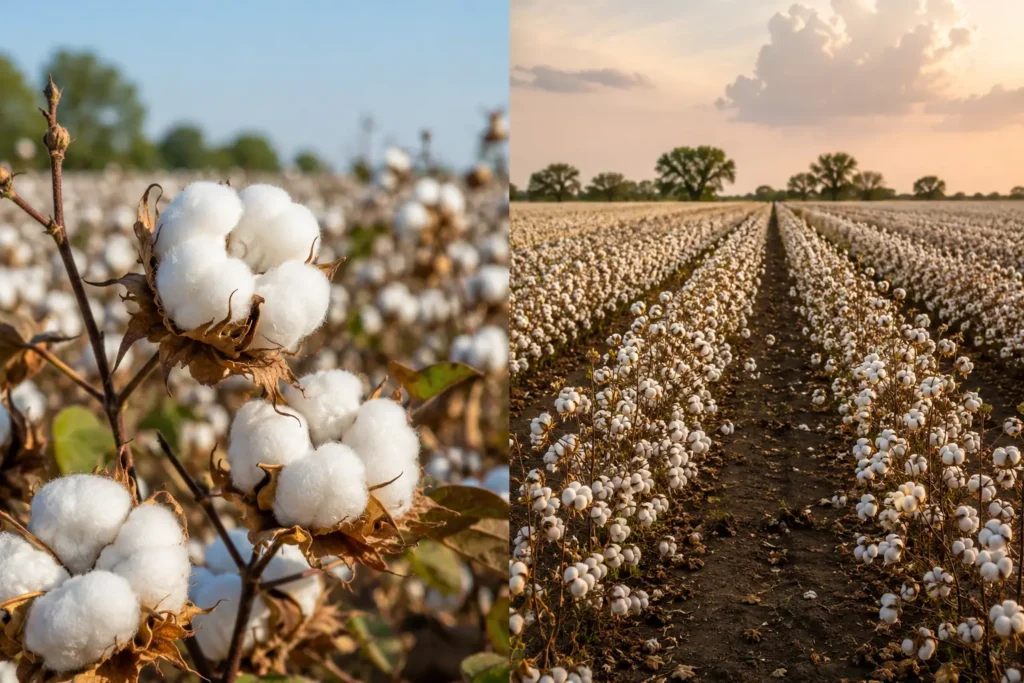
Cotton has always been one of the most important fibres in textiles.
But what happens to cotton waste after it is produced or used?
Instead of sending it to landfill or disposal, some cotton waste can be converted back into usable fibre.
This is where recycled cotton comes in.
Recycled cotton is becoming increasingly relevant for textile brands looking to improve resource efficiency and reduce textile waste.
But recycled cotton is not a simple replacement for virgin cotton.
It has its own benefits, limitations and technical considerations.
What Is Recycled Cotton?
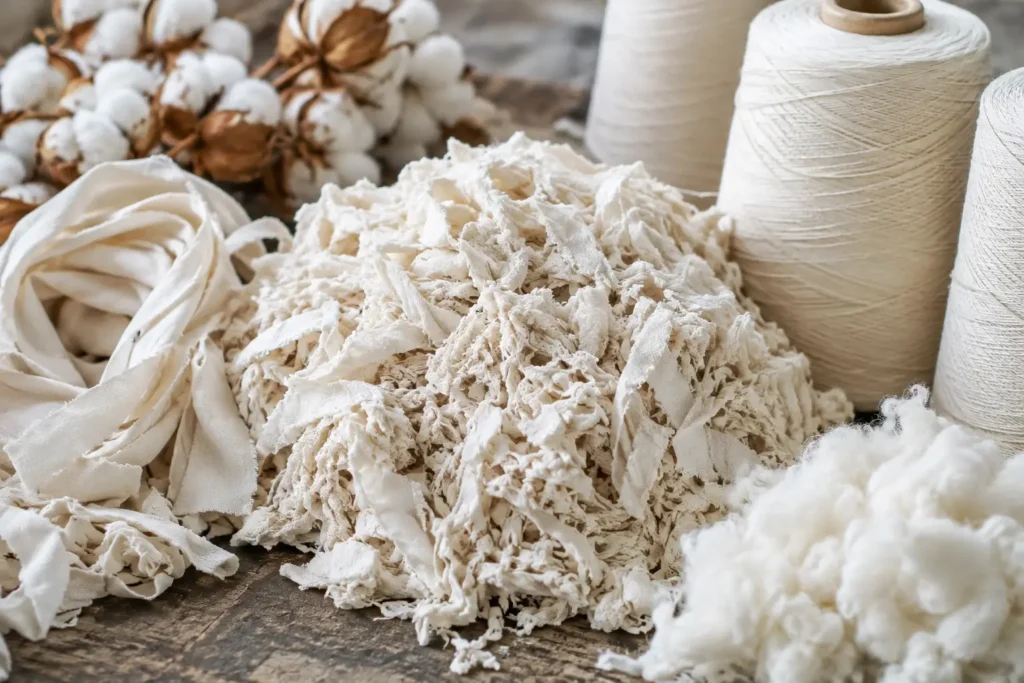
Recycled cotton is cotton fibre recovered from textile waste.
The waste can come from different sources.
It may come from garment cutting waste.
It may come from spinning or weaving waste.
It can also come from discarded or used textile products.
The recovered material is processed and converted into fibre again.
That fibre can then be used to make new yarns and textile products.
Where Does the Waste Come From?
There are two main sources of recycled cotton.
Pre-consumer textile waste comes from manufacturing.
Examples include fabric cutting waste, spinning waste and production offcuts.
This material is generally cleaner and easier to process.
Post-consumer textile waste comes from products that have already been used.
Examples include old garments, towels, bed linen and other cotton products.
Post-consumer recycling is generally more complex.
The material may contain dyes, finishes, blends, stitching and other components.
How Is Cotton Recycled?
The process begins with collecting suitable cotton waste.
The waste is sorted according to fibre type, colour and quality.
Unwanted materials such as buttons, zippers and other components are removed.
The textile material is then opened mechanically.
Machines gradually pull the fabric apart.
The aim is to separate the textile structure and recover usable fibres.
The recovered fibres are then cleaned and prepared for spinning.
The Fibre Becomes Shorter
This is one of the most important technical limitations.
Cotton fibres can become shorter during mechanical recycling.
Every time the material is mechanically opened, some fibre damage can occur.
Shorter fibres are more difficult to spin into fine, strong yarns.
Therefore, recycled cotton is often blended with virgin cotton or other suitable fibres.
The exact blend depends on the required product performance.
Why Blend Recycled Cotton?
Blending can improve yarn strength and processing performance.
Virgin cotton provides longer fibres.
Recycled cotton contributes recovered material to the yarn.
The correct blend can provide a balance between sustainability and product performance.
The percentage of recycled content therefore depends on the application.
A towel, kitchen textile and lightweight fabric may require different constructions.
Benefits of Recycled Cotton
The biggest benefit is waste reduction.
Cotton waste that might otherwise be discarded can be brought back into the textile system.
Recycling can also reduce the need for some virgin raw material.
This can reduce the pressure on agricultural resources.
Recycled cotton can also support a more circular approach to textile production.
For manufacturers, recovering production waste can improve resource efficiency.
For brands, recycled content can support specific sustainability objectives.
Is Recycled Cotton Always More Sustainable?
Not necessarily in every situation.
The environmental benefit depends on several factors.
These include the source of the waste.
The recycling process used.
The energy required.
The transport involved.
The percentage of recycled material.
And the performance and lifetime of the finished product.
This is why sustainability claims should be supported by reliable data.
Colour Can Also Matter
Colour sorting can play an important role.
If textile waste is separated by colour, additional dyeing may sometimes be reduced.
This can help reduce the need for additional processing.
However, colour consistency can be challenging.
Different batches of recycled material may have different shades.
Careful sorting and process control are therefore important.
What About Fabric Quality?
Recycled cotton can produce good-quality textile products.
But the final quality depends on the recovered fibre and manufacturing process.
Important factors include fibre length, strength, cleanliness and uniformity.
Yarn construction also plays an important role.
So does the final fabric construction.
Good-quality recycled cotton requires proper selection and process control.
Recycled Cotton vs Virgin Cotton
Virgin cotton starts with newly harvested cotton fibre.
Recycled cotton starts with cotton that has already been used in a textile product or manufacturing process.
Virgin cotton generally provides longer and stronger fibres.
Recycled cotton helps recover existing textile resources.
Neither should be considered simply “better” in every application.
The right choice depends on the product requirements.
Where Can Recycled Cotton Be Used?
Recycled cotton can be suitable for many textile applications.
It can be used in certain home textile products.
It can be used in selected apparel fabrics.
It can also be used in yarns, accessories and other textile products.
The appropriate recycled content depends on the required strength, appearance and performance.
What Should Buyers Ask?
Buyers should ask where the recycled cotton comes from.
Is it pre-consumer or post-consumer material?
What percentage of the product is recycled cotton?
Is the recycled content certified?
How is the material traced through the supply chain?
What fibre specifications are available?
What testing has been carried out?
These questions help buyers understand what they are actually purchasing.
Certification and Traceability
Recycled-content claims should be supported by appropriate certification where required.
Standards such as the Global Recycled Standard (GRS) provide a framework for verifying recycled content and chain of custody.
Traceability is important because recycled material can pass through several stages before becoming a finished textile.
A buyer should therefore look beyond the words “made with recycled cotton.”
The supporting documentation matters.
The Challenge of Textile-to-Textile Recycling
One of the industry’s biggest challenges is recycling used textiles back into new textiles.
Post-consumer products can contain fibre blends.
They may also contain dyes, finishes, labels, stitching and other materials.
Separating these components can be difficult.
Mechanical recycling can also reduce fibre length.
For this reason, textile-to-textile recycling is still developing.
What Is the Future?
Recycled cotton is likely to become an increasingly important part of the textile industry.
Better collection systems can provide more suitable waste.
Improved sorting can improve the quality of recovered material.
New recycling technologies may help recover more usable fibre.
Better product design can also make future recycling easier.
The industry is gradually moving from a linear model towards a more circular model.
The Real Opportunity
Recycling alone cannot solve the textile industry’s sustainability challenges.
Waste reduction should ideally begin before the waste is created.
Better product design can reduce material waste.
Efficient cutting can reduce production offcuts.
Longer-lasting products can reduce replacement frequency.
And recycling can provide another opportunity to recover value from material that remains.
Conclusion
Recycled cotton offers an important opportunity for the textile industry.
It can help reduce textile waste and increase the use of recovered resources.
But recycled cotton also has technical limitations.
Fibre length, strength, colour consistency and processing performance need careful consideration.
The right blend and manufacturing process can help achieve the required product performance.
For textile buyers, the important question is not simply:
“Is this product made from recycled cotton?”
A better question is:
“Where did the recycled material come from, how was it processed, and how does it perform in the finished product?”
At Real Textiles, we believe sustainability should work together with product quality.
The objective is to use recycled materials where they make technical and environmental sense.
Because a sustainable textile should not only use recovered resources.
It should also perform well, last longer and deliver real value to the customer.